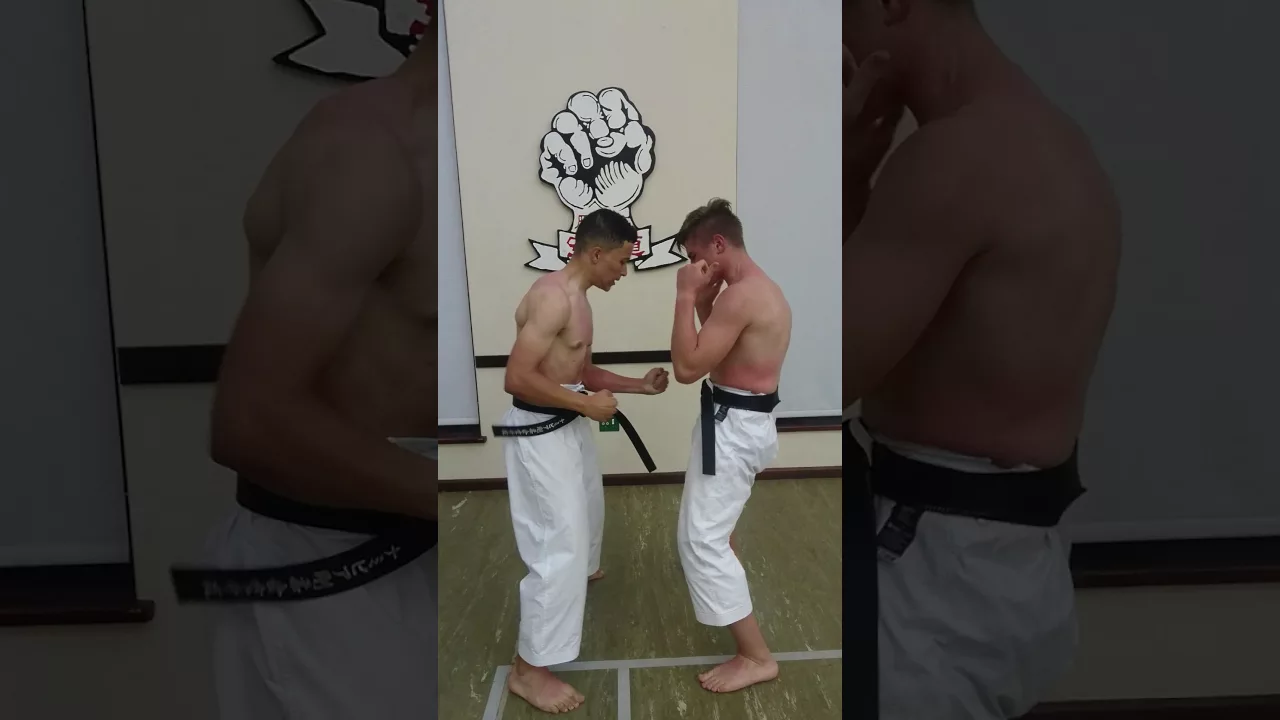
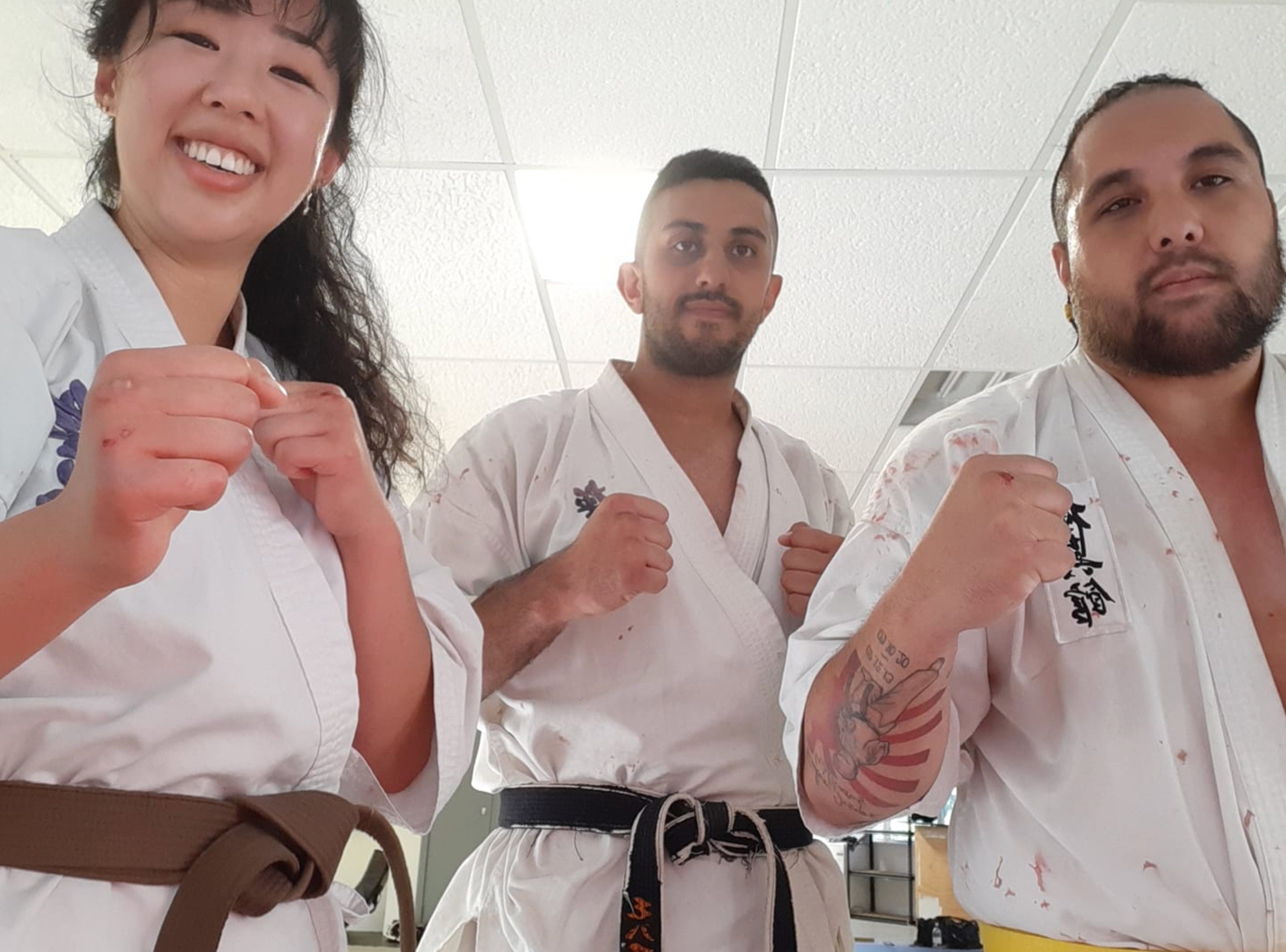

If you’re researching Muay Thai or kickboxing gyms in Auckland, you’ve probably noticed one thing straight away: there are plenty of options.
What most people don’t realise is that there’s another full-contact striking art training quietly alongside them — one that’s often misunderstood, underestimated, or lumped in with point-scoring karate.
That art is Kyokushin.
Not kids’ karate.
Not fitness karate.
But bare-knuckle, full-contact, knockdown karate — the style that produced fighters like Andy Hug and Francisco Filho, and helped shape the striking foundations of many elite kickboxers and MMA fighters.
This article is an honest comparison of Kyokushin, Muay Thai, and kickboxing — how they train, how they differ, and which might suit you best if you’re looking for serious, full-contact striking in Auckland.
No hype.
No politics.
Just the reality.
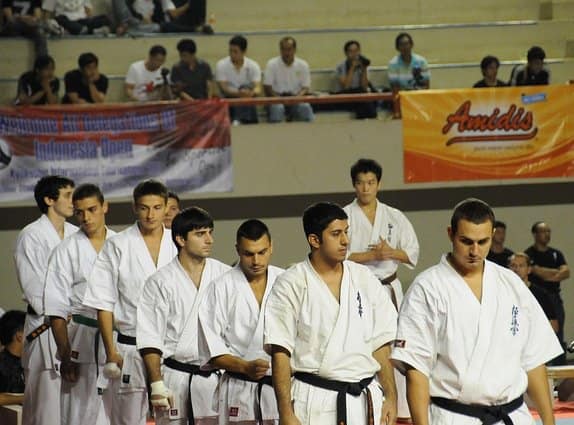
Kyokushin is a full-contact Japanese striking art founded by Mas Oyama. It’s known for:
Bare-knuckle body striking
Devastating low kicks
Heavy conditioning
Continuous pressure
Knockdown sparring (no point scoring)
Training is built around kihon (fundamentals), kata, conditioning drills, pad work, and controlled full-contact sparring.
There are no gloves hiding bad mechanics.
No points for light taps.
If your technique doesn’t work under pressure, it gets exposed quickly.
Kyokushin’s reputation wasn’t built on marketing — it was built on who survived the training.
Muay Thai is Thailand’s national sport and one of the most effective striking systems in the world.
It emphasises:
Punches, kicks, knees, and elbows
Clinch fighting
Rhythm and timing
Ring experience and competition
Muay Thai gyms in Auckland range from elite fight teams to beginner-friendly community gyms. Conditioning is intense, and fight IQ at higher levels is exceptional.
It’s one of the best striking systems ever developed — no question.
Kickboxing is a ruleset-driven striking sport, not a single tradition.
Depending on the gym, it may focus on:
Boxing combinations + kicks
Pad work and bag work
Fitness or competition
Ring or K-1 style fighting
Some kickboxing gyms are extremely technical and competition-driven. Others are more fitness-oriented.
The experience varies more than Muay Thai or Kyokushin — the quality depends heavily on the gym.

Kyokushin
Full-contact karate with bare-knuckle body strikes and heavy conditioning.
Muay Thai
Full-contact with gloves, elbows, knees, clinch fighting, and ring experience.
Kickboxing
Ruleset-driven striking sport with gloves, combinations, and footwork emphasis.
Conditioning
Kyokushin
Extreme full-body conditioning through repetition and impact tolerance.
Muay Thai
High shin conditioning and intense cardio from clinch and pad work.
Kickboxing
Conditioning varies widely depending on gym focus and competition rules.
Technique Focus
Kyokushin
Fundamentals, posture, toughness, and pressure fighting.
Muay Thai
Rhythm, timing, clinch control, and balance.
Kickboxing
Combinations, movement, and boxing-centric striking.
Who Is It Best For?
Kyokushin
People who want mental toughness and discipline
Those comfortable with hard contact and conditioning
Practitioners who value traditional structure and resilience
Muay Thai
People who want full-spectrum striking
Those interested in competition, clinch work, and ring fighting
Practitioners who enjoy high-intensity, athletic training
Kickboxing
People who want fast skill development
Those focused on fitness, combinations, and movement
Practitioners interested in sport or cross-training for MMA
It depends on what you mean by “hard.”
All three are demanding.
Muay Thai adds elbows and clinch punishment.
Kyokushin adds bare-knuckle body shots and relentless conditioning.
Edge: Tie — different kinds of suffering.
Kyokushin places more systematic emphasis on full-body conditioning:
Body hardening
Repetitive fundamentals
Impact tolerance
High-volume drilling
Muay Thai conditions heavily too — but usually with a fight-camp focus.
Edge: Kyokushin
Kyokushin culture is built on not quitting.
Pressure, fatigue, discomfort — they’re part of class, not something reserved for competition.
Muay Thai fighters are mentally tough in fights, but day-to-day gym culture can be more relaxed.
Edge: Kyokushin
Kyokushin’s rigid drilling of fundamentals produces:
Very clean mechanics
Sharp power generation
Fast, precise strikes
Strong balance under pressure
Muay Thai excels in timing, rhythm, and adaptability — especially at higher levels.
Edge: Different strengths — Kyokushin for mechanics, Muay Thai for fight rhythm.
Muay Thai gives a more complete stand-up ruleset (elbows, clinch).
Kyokushin provides:
Elite conditioning
Devastating low kicks
Pressure tolerance
Strong striking base
Many fighters successfully blend both.
Edge: Muay Thai for rules coverage, Kyokushin for base development.
Kyokushin is for you if:
You want real contact, not point scoring
You value discipline and structure
You want to build sharp fundamentals and power
You’re interested in MMA, kickboxing, or self-development
You think “hard training” is a feature, not a problem
This includes women and men — some of the toughest Kyokushin practitioners are female.
Choose Muay Thai if:
You want clinch fighting and elbows
You want a clear fight pathway
You enjoy a looser gym culture
Choose kickboxing if:
You want boxing-heavy combinations
You prefer gloves and ring fighting
You want flexibility in training style
All are legitimate paths.
Auckland has excellent Muay Thai and kickboxing gyms across the CBD, North Shore, and South Auckland — many with strong competition records.
For full-contact Kyokushin karate, Auckland City Kyokushin trains in the Auckland CBD, focusing on:
Bare-knuckle conditioning
Clean fundamentals
Disciplined dojo culture
Adults and committed youth training together
Optional invitation-only advanced sessions
We’re not a fitness class.
We’re not a kids’ karate school.
But we do train for the long haul — strength, mobility and recovery included. See Pilates, recovery and cross-training for martial artists.
Train a couple of sessions at a Muay Thai or kickboxing gym.
Then come experience Kyokushin.
The best martial art is the one you’ll train consistently — but if you’re the kind of person who values discipline, conditioning, and real pressure, Kyokushin tends to reveal itself quickly.
Both are full-contact striking arts, but Kyokushin focuses more on bare-knuckle body conditioning and fundamental mechanics, while Muay Thai emphasises clinch work, elbows, and ring fighting.
Yes. Training is progressive. You’re not thrown into hard sparring immediately — but effort and consistency are expected from day one.
Kyokushin builds striking power, composure under pressure, and resilience. While it’s a sport-based system, its conditioning and mindset transfer well to real-world situations.
Absolutely. Many fighters use Kyokushin as a base before adding boxing, wrestling, or Muay Thai.
Yes — when taught correctly. Sparring is controlled, supervised, and earned through consistent training.
There’s no “best” striking art — only the one that fits your mindset.
But if you’re comparing Muay Thai, kickboxing, and Kyokushin because you want something real, challenging, and honest…
Kyokushin is worth experiencing firsthand.
OSU.