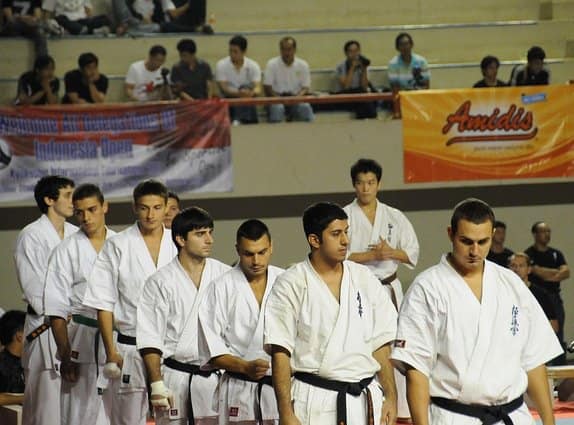
Pilates, Mobility & Recovery for Martial Artists in Auckland

Hard training creates a simple problem.
You have to recover well enough to train again.
That does not mean every sore muscle needs a recovery class. It does not mean Pilates prevents injuries. It does not mean yoga repairs connective tissue or that stretching can compensate for poor sleep, poor nutrition or too much training load.
The useful hierarchy is less exciting.
Manage the training. Sleep. Eat. Hydrate. Rest. Then decide whether supplementary work earns its place.
Pilates, mobility work and yoga can be useful for martial artists. They may help develop qualities such as trunk control, balance, flexibility and range of motion. They can also provide a different movement stimulus from the dojo.
But they are supplementary training.
They are not substitutes for recovery fundamentals, medical care or the martial art itself.
The dojo is the main training. Everything else should earn its place.
The Short Answer
If you train Kyokushin, BJJ, Muay Thai, Boxing, MMA or another demanding combat sport, think about recovery and supplementary work in this order:
Priority
Main job
Where Pilates / mobility / yoga fit
Training load
Make the total work sustainable enough to adapt to
Extra sessions add load; they do not erase excessive load
Sleep
Support recovery, health and performance
A class cannot compensate for chronically inadequate sleep
Nutrition + fluids
Support training and recovery demands
Supplementary movement does not replace adequate fuelling and hydration
Rest / lower-load time
Create space between demanding sessions
Gentle movement may fit here, depending on intensity
Strength / mobility needs
Develop a specific physical quality
Pilates, mobility work or yoga may be useful when they solve an actual need
Injury / persistent pain
Assessment and appropriate care
See a qualified health professional; do not treat a class as rehabilitation
This is deliberately unglamorous.
Recovery is not a product.
It is the process that allows the body to respond to the work you have already done.

Recovery Starts With the Training Load
The first recovery tool is the training plan.
Sports-medicine consensus statements describe recovery as part of the balance between training stress and adaptation. When load exceeds what an athlete can currently recover from, adding more “recovery work” is not automatically the answer.
Sometimes the answer is less load.
Sometimes it is better spacing between hard sessions.
Sometimes it is keeping the same workload but improving sleep, food, hydration or the organisation of the week.
And sometimes the athlete is recovering perfectly well and does not need to add anything.
That last point matters because martial artists are unusually good at turning optional work into another obligation.
Lifting. Running. Mobility. Yoga. Pilates. Extra sparring. Pads. Open mat.
Individually, each may be useful.
Together, they can become a second full training programme sitting on top of the first.
More useful things do not automatically create a more useful week.
Sleep Is Not the Soft Part
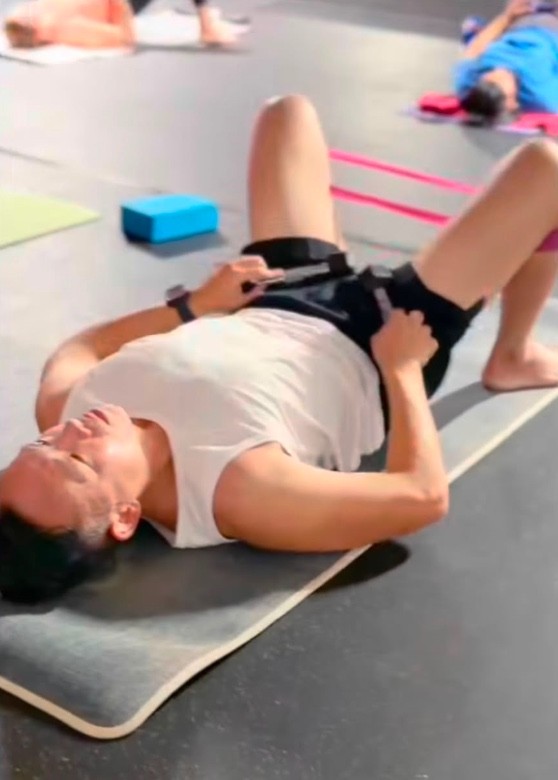
Sleep is a core recovery fundamental.
The 2021 athlete sleep consensus notes that athletes can be vulnerable to insufficient or poor-quality sleep and recommends an individualised approach rather than pretending one exact number suits everybody.
For a martial artist, the practical point is straightforward.
If your training week is already demanding and your sleep is consistently poor, adding another physical session is not an obvious recovery strategy.
That does not mean everybody needs to obsess over sleep trackers.
It means the basics deserve priority before the accessories.
A thirty-minute mobility session can be useful.
It cannot turn five hours of sleep into eight.
Food and Hydration Are Part of Recovery Too
Training uses energy and creates nutritional demands.
The joint position statement from the Academy of Nutrition and Dietetics, Dietitians of Canada and the American College of Sports Medicine states that well-chosen nutrition strategies support sporting performance and recovery.
The practical point is simple:
You need to fuel the work you are asking your body to repeat.
For somebody training several times per week, poor fuelling can make the entire schedule harder to sustain. Fluid needs also change with training duration, intensity, environment and individual sweat rate.
This is especially relevant around heated classes.
A hot room is not automatically “better recovery.” Heat adds its own physiological demand. If you are already depleted after hard martial-arts training, that matters.
For personalised sports-nutrition advice, speak with an appropriately qualified professional.
So What Can Pilates Actually Add?
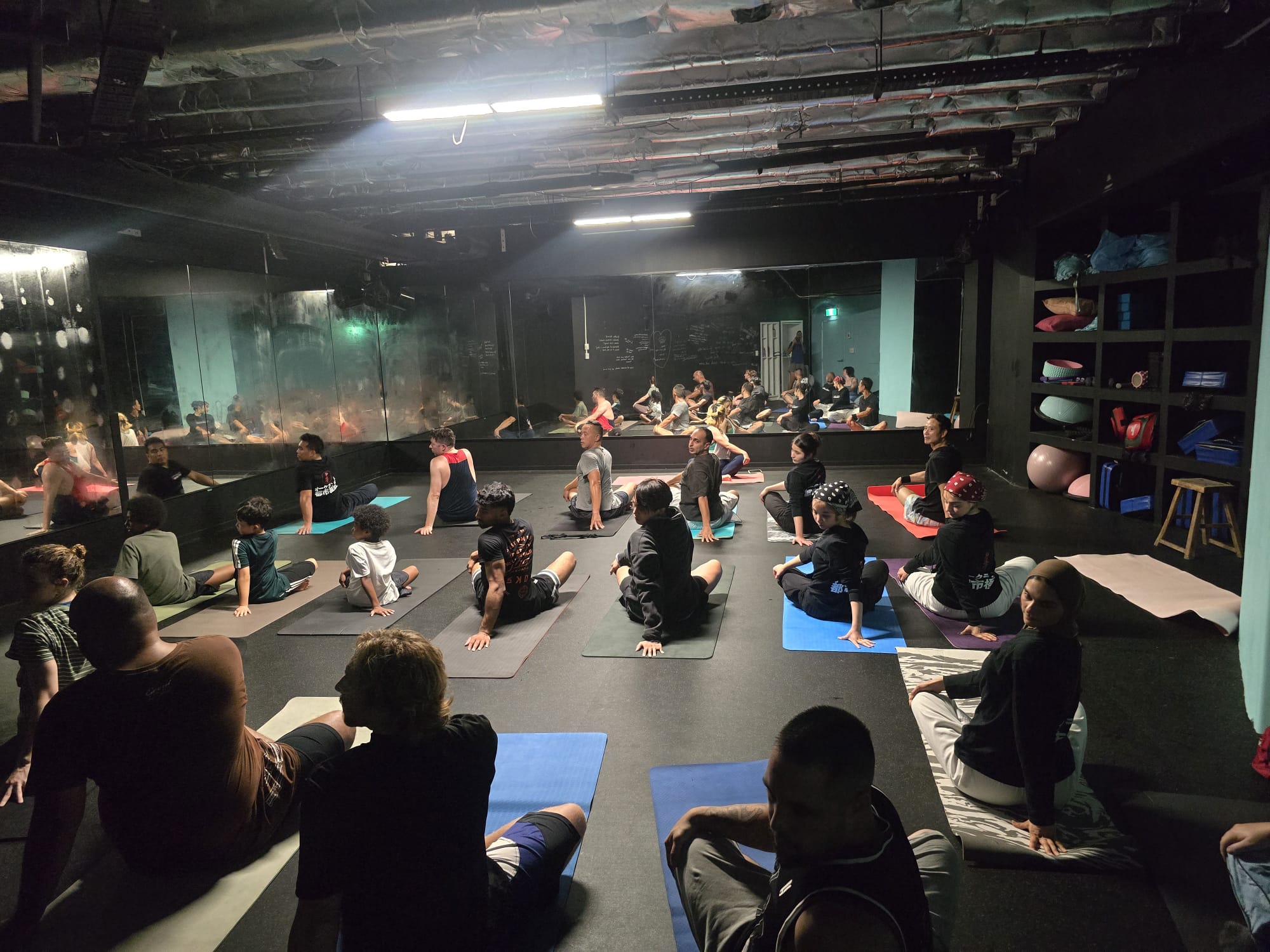
Pilates can be useful.
The strongest case is not that Joseph Pilates boxed, or that the method was somehow secretly invented for fighters.
The case is simpler: Pilates-style training can challenge trunk control, balance, movement quality and range of motion in ways that may complement sport-specific work.
A 2023 systematic review of Pilates exercise in athletes included 12 studies and reported improvements across measures including balance, flexibility, muscle strength, core strength, muscular endurance, coordination and some sport-specific performance outcomes.
A broader 2024 systematic review of mobility training in sporting populations found that mobility interventions — including Pilates, yoga and stretching approaches — often improved or maintained performance measures, while also noting limitations in study quality and the need for better research.
That is useful evidence.
It is not evidence that Pilates:
prevents Kyokushin injuries;
makes every kick higher;
produces harder punches by itself;
accelerates tissue healing;
fixes back pain;
replaces strength training;
makes an athlete “durable.”
Those claims go beyond what these reviews establish.
Trunk control and striking
Striking involves force moving through the whole body.
The legs, hips and trunk matter for transferring force and controlling position. A 2025 systematic review of core-strength training in striking combat sports found positive effects on some striking-performance measures, although only eight studies met the review criteria.
That supports a reasonable training idea:
Developing the trunk can matter for striking performance.
It does not prove:
Pilates makes your punches harder.
Core-strength training and Pilates overlap, but evidence for core-strength training cannot simply be treated as evidence for Pilates.
Mobility: Useful When You Need More Range
Kyokushin asks for range of motion.
Kicks require the hip and supporting leg to move through positions that ordinary daily life rarely demands. Ankles, hips and trunk all contribute to how comfortably somebody can enter and control those positions.
Stretch training can improve joint range of motion.
A systematic review and meta-analysis of 77 studies found that stretch training significantly increased joint range of motion compared with control conditions.
That does not mean every martial artist needs maximal flexibility.
It means insufficient range of motion can become a real constraint on some techniques, and mobility work can be one tool for addressing it.
The target should be usable range.
Not flexibility for its own sake.
If your hip can reach the position but you cannot control the kick there, more passive range may not solve the whole problem. If you lack the range entirely, technical drilling alone may not solve that either.
Martial-art practice and supplementary mobility work can address different parts of the problem.
Yoga Can Be Training, Recovery or Neither
“Yoga” is too broad to treat as one physical stimulus.
A demanding hot class can be training.
A slower mobility-focused session may be relatively low load.
A long static-stretching session has a different effect again.
The name of the class does not tell you what it costs your body.
That is why the useful question is not:
Is yoga good for recovery?
It is:
What does this session actually ask me to do, and does that fit the rest of my week?
Research in athletic populations suggests yoga may help qualities such as flexibility and balance, although results vary by population, programme and outcome.
That can make yoga a useful supplementary option for some athletes. It does not mean yoga directly improves fighting stamina, prevents injury or ‘flushes’ damage from hard training.
Hot HIIT Pilates Is Training Load
This distinction is particularly important in Auckland because HIYOGA currently offers Hot HIIT Pilates as well as Hot Yoga.
HIYOGA describes its Hot HIIT Pilates as a low-impact, high-intensity full-body workout in a studio heated to approximately 35°C.
That may be useful training.
It is not a passive recovery intervention.
If you do a hard Kyokushin session, then add a high-intensity heated workout, you have added training load. Whether that is a good idea depends on the rest of your week, your goals and how you respond.
This is not an argument against the class.
It is an argument for calling the training what it is.
If it is hard enough to create fatigue, count it as training.
When Supplementary Work Earns Its Place
Pilates, mobility or yoga make the strongest case when they solve a problem you can actually identify.
For example:
you need more usable hip range for kicking;
you want a structured way to train balance and trunk control;
you want a lower-load movement session that fits between harder dojo sessions;
you want a separate practice focused on mobility;
you train multiple martial arts and need to be more deliberate about how the week is organised.
The choice should be practical.
If a supplementary session leaves you consistently too tired to move well in the dojo, it may not be supporting the main training.
If it helps you address a physical quality without degrading the sessions that matter most, it may be earning its place.
You do not need to collect every useful method.
You need enough useful work, done consistently.
What About Soreness?
Soreness is not a perfect recovery score.
You can be sore and ready to train.
You can also feel relatively fresh while carrying accumulated fatigue.
Use the information, but do not worship it.
The same applies to foam rolling, stretching, massage, saunas, cold exposure and every other recovery tool that can become a ritual.
Some may make you feel better.
Some may have specific evidence behind particular outcomes.
None of them changes the basic problem:
the total training and life load still has to be recoverable.
If Pain or Injury Is Affecting Training
If pain is persistent, worsening or affecting normal movement or training, get it assessed by an appropriate qualified health professional.
ACK does not provide physiotherapy or rehabilitation. HIYOGA is not being presented as a rehabilitation clinic.
Pilates and mobility work can be useful forms of supplementary training, and they may also appear within professionally supervised rehabilitation programmes. But a general class is not a diagnosis, treatment plan or substitute for appropriate clinical care.
Training support and rehabilitation are different jobs.
How to Add Supplementary Work Without Sabotaging the Dojo
There is no universal weekly schedule.
A beginner doing two Kyokushin classes has a different workload from an experienced competitor adding invitation sessions, running, lifting and another martial art.
Use a few simple questions.
1. What is the main training?
If Kyokushin is your main martial art, protect the quality of the Kyokushin sessions.
Do not turn supplementary work into the centre of the week.
2. What problem is the extra session solving?
“Recovery” is too vague.
Are you working on range of motion?
Trunk strength?
Balance?
General movement?
A low-load day?
Enjoyment?
Know why it is there.
3. How hard is it really?
A hard Pilates class is training.
A demanding hot yoga class is training.
A mobility session can also become a hard session if you push it aggressively.
Count the actual stress, not the class label.
4. What happens to the next dojo session?
This is one of the simplest useful tests.
If the supplementary work repeatedly makes your main training worse, adjust the dose, placement or exercise choice.
5. Can you keep doing the whole week?
A perfect seven-day plan that lasts three weeks is not a good plan.
Consistency beats an impressive spreadsheet.
Auckland City Kyokushin currently trains at two central Auckland venues: the Ellen Melville Centre and HIYOGA Studio.
ACK’s core service is Kyokushin. We do not operate a public Pilates or yoga programme. Isabella Qiu — Bella to the dojo — offers a weekly supplementary movement session to the Auckland City Kyokushin group, while HIYOGA remains a separate business and venue.
HIYOGA operates from Level 2, 125 Queen Street in Auckland CBD and currently offers Hot Yoga and Hot HIIT Pilates. Bella’s background includes Bikram yoga, Ashtanga yoga, Pilates and Hot HIIT Pilates instructor training, alongside REPs certification.
For ACK members, that creates a practical connection between the main martial-arts training and supplementary movement work. The purpose is not to replace Kyokushin training, but to give students dedicated time to work on qualities such as mobility, trunk control, balance and movement outside a normal dojo session.
The extra work supports the dojo. It does not replace it.
For HIYOGA’s current public classes, instructors, pricing and timetable, visit the HIYOGA website.
Is Pilates good for martial artists?
It can be useful supplementary training. Research in athletic populations suggests Pilates may help qualities such as balance, flexibility, trunk strength and movement control. Current evidence does not support treating Pilates as a guarantee of injury prevention, faster recovery or automatic improvements in fighting performance.
Is Pilates good for Kyokushin?
It may be useful if it addresses a specific need such as trunk control, balance or mobility. It should support Kyokushin rather than replace technical training, kumite, conditioning or appropriate strength work.
Does Pilates make you kick higher?
Not automatically. Greater range of motion can help when limited mobility is restricting a kick, but kicking also depends on strength, balance, coordination, technique and control through the available range.
Does Pilates prevent martial-arts injuries?
Do not treat it as an injury-prevention guarantee. Injury risk is influenced by many factors, including training load, exposure, previous injury, physical preparation and the sport itself.
Does yoga help recovery after martial arts?
It depends on the session. A low-load mobility-focused practice may fit well between harder sessions. A demanding hot yoga class adds meaningful training stress and should be counted accordingly.
Is Hot HIIT Pilates recovery?
Not in the usual sense. HIYOGA currently describes Hot HIIT Pilates as a high-intensity workout performed in a heated studio. It may be useful supplementary training, but it adds training load.
Should I stretch after Kyokushin?
You can use stretching to work on range of motion, but there is no requirement that every class must end with a long stretching routine. Use mobility work according to the range you need and the rest of your programme.
What matters most for recovery?
There is no single recovery hack. Training-load management, sleep, adequate nutrition and fluids, and enough lower-load time form the base. Supplementary methods come after that.
Does Auckland City Kyokushin teach Pilates or yoga?
ACK is a Kyokushin dojo, not a public Pilates or yoga studio. Isabella Qiu — Bella to the dojo — offers a weekly supplementary movement session for the Auckland City Kyokushin group, while HIYOGA remains a separate business and venue.
Should I train through pain?
If pain is persistent, worsening or affecting normal movement or training, seek appropriate professional assessment. A general Pilates, mobility or yoga class is not a substitute for diagnosis or rehabilitation.
Keep the Main Training the Main Training
Supplementary work can be useful.
Use it to solve a real problem.
Do not ask it to do jobs it cannot do.
Kyokushin skill still comes from Kyokushin training: fundamentals, repetition, partner work, conditioning, kumite and years of showing up.
Hard training only works if you can keep doing it.
If full-contact Kyokushin is the main training you want, come train it properly.